
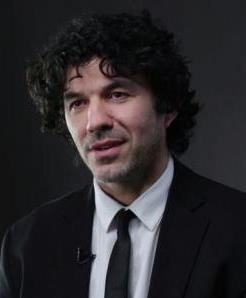
Suljo Linic, Martin Lewis Perl Collegiate Professor of Chemical Engineering, University of Michigan
"Chemical Catalysis and the Environment: The Good, the Bad, the Ugly, and the Path Forward"
Abstract:
While chemical catalysis is the foundation of modern energy systems, legacy manufacturing processes remain burdened by high energy intensity, unwanted emissions, and severe selectivity trade-offs. These limitations are rooted in fundamental kinetic and thermodynamic constraints faced by conventional approaches to catalysis. Our work established a new paradigm for catalyst design: by engineering both the active site and its chemical environment (i.e., coupling multiple functionalities into one reactive material), we can control local chemical potentials of reactants and overcome limitations that active-site design alone cannot address. This conceptual advance opens pathways for the development of reactive systems that can bypass the restrictions of the traditional approaches.
We illustrate this approach through two case studies where catalytic and separation functionalities are coupled at atomistic scales to enable difficult chemical transformations (1-4). In the first example, we show that an integration on an (ion)-conducting membrane with selective catalysts suppresses deep oxidation in oxidative coupling of methane (OCM), achieving significantly higher (ethane and ethylene) selectivity and yield relative to classical approaches (1). In the second example, we show that integrating selective membranes for in-situ (hydrogen) removal with propane dehydrogenation (PDH) catalysts (2) offers a direct route to override the thermodynamic equilibrium limits that represent the central challenge in this field of chemical dehydrogenation of hydrocarbons (3).Together, these systems demonstrate how engineering catalytic active sites and transport microenvironments in tandem provides a practical, sustainable path forward for chemical manufacturing (4).
- J. Wortman, V. Igenegbai, R. Almallahi, A. Motagamwala, S. Linic, Optimizing hierarchical membrane/catalyst systems for oxidative coupling of methane using additive manufacturing, Nature Materials, 22 (12), 1523-1530, 2023, doi.org/10.1038/s41563-023-01687-x
- R. Almallahi, J. Wortman, V. Igenegbai, S. Linic, Overcoming limitations in propane dehydrogenation by co-designing catalysts/membrane systems, Science,383, 6689, 1325-1331, 2024, DOI: 10.1126/science.adh3712
- J Wortman, J Zhao, J Zhang, S Linic, Multifunctional membrane–catalyst systems for chemical upgrading of shale gas, Nature Chemical Engineering, 1-12, 2025, DOI: 10.1038/s44286-025-00252-4
- AH Motagamwala, R Almallahi, J Wortman, VO Igenegbai, S Linic*, Stable and selective catalysts for propane dehydrogenation operating at thermodynamic limit, Science, 373 (6551), 217-222, 2021, (DOI: 10.1126/science.abg7894)
Bio:
Suljo Linic was born in northwestern Bosnia and Herzegovina, where he completed his elementary and high school education. His family were forcefully displaced from Bosnia during the Bosnian war of 1990s. He moved to the USA in 1994 after being awarded a faculty scholarship from West Chester University (West Chester, PA). He completed his BS degree in Physics with minors in Mathematics and Chemistry at West Chester University (PA) in the spring of 1998. Suljo obtained his PhD degree in chemical engineering at University of Delaware, specializing in surface and colloidal chemistry and heterogeneous catalysis. He was a Max Planck postdoctoral fellow with Prof. Dr. Matthias Scheffler at the Fritz Haber Institute of Max Planck Society in Berlin (Germany), working on first principles studies of surface chemistry. He started his independent faculty career in 2004 at the Department of Chemical Engineering at the University of Michigan in Ann Arbor where he is currently Martin Lewis Perl Collegiate Professor of Chemical Engineering and the director of Energy Systems Engineering program. He was also a Hans Fischer Faculty Fellow from 2015 to 2019 at the Department of Chemistry at Technical University in Munich. He served as an associate chair in the Department of Chemical Engineering at the University of Michigan from 2017 – 2022.
Suljo’s research has been recognized through multiple awards including the Gabor A. Somorjai Award by ACS, the Emmett Award by The North American Catalysis Society, the ACS Catalysis Lectureship for the Advancement of Catalytic Science awarded annually by the ACS Catalysis journal and Catalysis Science and Technology Division of ACS, the Nanoscale Science and Engineering Forum Young Investigator Award by American Institute of Chemical Engineers, the ACS Unilever Award awarded by the Colloids and Surface Science Division of ACS, the Camille Dreyfus Teacher-Scholar Award awarded by the Dreyfus Foundation, the DuPont Young Professor Award, and a NSF Career Award. Suljo has presented more than 250 invited and keynote lectures, published more than 110 peer-reviewed papers in leading journal with over 27,000 citations. He serves as the associate editor of Journal of Catalysis.