
Suzanne C. and Duncan A. Mellichamp Distinguished Lecture
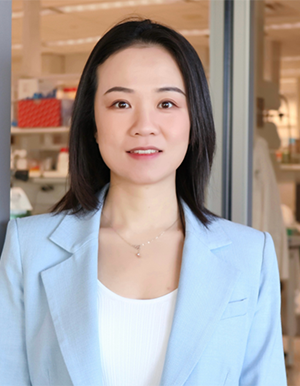
Xiwen Gong, Assistant Professor of Chemical Engineering, University of Michigan
"Engineering Functional Interfaces for Stable Electronic Materials: From Solar Energy to Bio-integrated Electronic Systems"
Abstract:
Modern technologies—from renewable energy systems to wearable health monitoring—are placing increasing demands on electronic materials. Solar energy devices must operate reliably for decades under environmental stress, while emerging biointegrated technologies require electronics that can conform to soft and dynamic biological environments. Many of the most promising electronic materials discovered in the past decade—including perovskites, colloidal quantum dots, and soft ionic conductors—exhibit exceptional optical and electronic properties. Yet these materials are often intrinsically fragile: their performance can degrade under thermal stress, mechanical deformation, chemical reactions, or complex biological interfaces. A central challenge in modern electronics is therefore: how can we design material structures and interfaces so that fragile functional materials can operate reliably in complex environments?
In this talk, I will discuss our group’s efforts to address this challenge through molecular and interfacial engineering of solution-processed electronic materials. I will highlight recent advances in molecular passivation and interfacial design of perovskite semiconductors for stable optoelectronic devices, strategies for creating mechanically robust optoelectronic systems using hybrid semiconductor heterostructures, and emerging work on soft electronic interfaces for bioelectronic integration, including hydrogel-based neural electrodes and wearable sensors. These studies establish design principles for functional electronic interfaces, enabling materials systems that are not only high-performing but also stable, adaptive, and compatible with real-world operating environments.
Bio:
Dr. Xiwen Gong joined the University of Michigan in 2021 as an Assistant Professor of Chemical Engineering, following a postdoctoral fellowship at Stanford. She earned her Ph.D. in Electrical and Computer Engineering from the University of Toronto (2018) and her B.S. in Materials Physics from Fudan University (2014). Gong’s research focuses on developing next-generation solution-processed semiconductors, including perovskites and quantum dots, to create stable, adaptive, and multifunctional optoelectronic and bioelectronic devices for energy harvesting and personalized healthcare. She received the NSF CAREER Award (2024), the ACS Petroleum Research Fund (PRF) Doctoral New Investigator Award (2023), and the Amazon Physical Science Fellowship (2022). She was selected as one of the “Rising Stars in EECS” (2017), Schmidt Science Fellows (2018), and Nature’s Inspiring Women in Science (2023, runner up), Sony Women in Technology with Nature (2026, winner), and Wu Yi-fang Junior Faculty Award in Engineering and Applied Sciences (2026). She serves as an Associate Editor for ACS Photonics.